EMT Practice Test

1. Question Content...


Question List

Question1: Which one of the following is the most effective way to determine if radar will force APs away from DFS channels?

Question2: Which one of the following devices are least likely to cause interference for multiple clients of an 802.11 WLAN?

Question3: As part of the design for a large WLAN that will include hundreds of APs operating in both 2.4 GHz and 5 GHz bands, you are changing AP settings so that APs on the same channel are spaced significantly far apart such that they have lessened impact on each other's BSAs. What common WLAN program are you attempting to diminish?

Question4: During a post-deployment verification, you are requested to troubleshoot an area where users are experiencing poor throughput. They are using data communication only, mainly from laptops. You captured the frame showing an incorrect FCS. This frame is typical of those that were captured by the analyzer.
What does this frame reveal about the RF network in this area?

Question5: As an implementation engineer, you have just received initial design specs from a network designer for your dual-band 802.11n deployment. The network design documents prescribe the following data rate configuration for the 2.4 GHz radio:
Basic Rates - 5.5, 6, 11, 12 Mbps
Supported Rates - 9, 18, 24, 36, 48, and 54 Mbps as well as MCS 0-15
What will result from this design strategy?

Question6: At a university, the WLAN has been successfully deployed for ubiquitous access for faculty, students, and guests. Many student computer labs are available throughout the campus with wired network connectivity, but there are also a few smaller lab areas and workstations where Ethernet cabling is not available. For student wireless use, the students must authenticate against RADIUS/Active Directory using PEAP. Also, the network administrators at this university would like administrative access to these workstations when they are not in use by students so that the administrators can manage group policies, update OS patches, and perform other routine software maintenance.
What deployment option is available and recommended for both student use and remote administration of these workstations?

Question7: What should always be done before connecting an AP to the production network?

Question8: You are planning an outdoor link. The link distance will be 1.3 miles (2.09 kilometers).
Only two endpoints will be involved in the link. What kind of link should be created in every such scenario?

Question9: When performing a site survey in a secure facility, which one of the following is an important action?

Question10: What is the purpose of Friis transmission equation [ (LdB) = 20 log(d) + 20 log (f) - 27.55 ]?

Question11: In a large enterprise (5000+ wireless users), by what would NOT be a recommended method by which IP addresses and VLANs are assigned to different clients associated to the same AP?

Question12: iPerf is a tool used in site surveys and validation surveys for what purpose?

Question13: In general, when planning for a multi-floor installation, how should the APs be installed on each floor in relation to their locations?
Choose the single best answer.

Question14: Given: As the wireless network administrator for XYZ Company, you are planning to upgrade your aging wireless network infrastructure, as well as some clients, to support 802.11ac. In your research, you have discovered that your new wireless client devices and infrastructure are 802.11ac, WMM, and WMM-PS certified by the Wi-Fi Alliance. Some of your existing client devices are 802.11a/b/g devices that do not support WMM.
Given this information, what scenario is possible when your company's employees begin using both types of client devices on the new WLAN?

Question15: When implementing a WLAN in a hospital environment, which one of the following is a common mistake made by designers?

Question16: What is the purpose of DHCP Option 43, and how is it used with WLANs?
Question17: Given: For this fill-in the blank question, each answer option contains an answer for the first and second blanks, separated by a dash "-". Choose the answer option that correctly fills in both blanks in the following sentence.
A WLAN may use 802.11 admission control to ________, and admission control requirements are configured separately for each ________.

Question18: You are testing a VoWLAN deployment, and your communication measurements show a certain amount of lost packets. What would be an acceptable packet error rate value to still provide acceptable call quality?

Question19: Why does a frame transmitted at 1 Mbps have a greater usable range than the same frame transmitted at
54 Mbps?

Question20: You have been tasked with performing safety and operations training for outdoor bridge link installation.
The antennas are to be installed on a 70-foot tower on one end and the roof top of an office building on the other end. What might be required for the tower installation?

Question21: Which one of the following areas would introduce the greatest challenge in coverage when designing a WLAN?

Question22: In a multiple channel architecture (MCA) network supporting 802.1X authentication, what aspect of WLAN design affects client roaming efficiency and effectiveness?

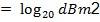
Question23: What basic RF math formula should be used as a baseline to convert an RF value in units of dBm into a value of mW?
*Note: "dBm" in the formulas represents the known dBm value
A: 0 dBm = 1 mW
B: mW
C:

D: mW

mW

Question24: What document might specify that RF propagation patterns, AP locations and configurations, and potential sources should be documented?

Question25: What are some advantages of designing guest access with all guest users tunneled directly into the DMZ?

Question26: You are planning for client devices in a WLAN that is be upgraded to 802.11ac. Which one of the following devices is more likely to have support for 3x3:3 radios and 256 QAM?

Question27: You are working on a VoWLAN design with your customer's wired networking team. How many distinct priority levels do you expect for the voice applications?

Question28: You are site surveying a network for VoWiFi. You have positioned an AP for a manual survey and are moving away from the AP with a phone in Survey Mode in your hand and you are reading the RSSI value of the signal received from the AP. You have previously determined that the noise floor was approximately
-94 dBm on this floor of the building. The phone's documentation does not specify a recommended RSSI or SNR value for best performance.
Based on the information provided and the type of device (VoWiFi phone) you are deploying, what minimum RSSI should you plan for in all areas you are monitoring and where VoWiFi service is desired?

Question29: When implementing an upgrade involving adding hardware to existing APs, what kind of upgrade is being deployed?

Question30: What statement is true of a WLAN design that supports Real-Time Location Services (RTLS) with 802.11 RFID asset tags?

Question31: What document helps to protect a consultant from legal action when designing a WLAN and performing site surveys?

Question32: ABC Manufacturing has a heavily-used dual-band (2.4 / 5 GHz) WLAN, but sporadic RF interference across the 2.4 GHz band is causing dropped VoWiFi calls and leading to data connectivity and throughput problems.
In addition to avoiding 2.4 GHz channels and installing a distributed spectrum analyzer to locate RF interference sources, what should the implementer do to resolve the problem fully?

Question33: You are the WLAN designer for a new WLAN to be implemented in a retail environment. In the process, you must ensure that all requirements are defined and documented. Into what requirement category would PCI DSS guidelines fit?

Question34: You are implementing an outdoor client access WLAN. It will serve employees and guests. It must cover an area of approximately 100 meters by 60 meters. You expect to support only 10-15 clients connected at a time. What kind of antennas are likely to be used in this situation assuming two APs have been chosen for the implementation?

Question35: ABC Company has a WLAN controller with 10 controller-based APs; the Voice SSID is configured for centralized data forwarding. Each AP is connected to an access port on a layer-2 Ethernet switch. Each layer-2 switch is uplinked to a single layer-3 core Ethernet switch. The WLAN controller is connected directly to the layer-3 core Ethernet switch. Layer-3 tunnels are created between all controller-based APs and the WLAN controller. A voice server is connected to the layer-3 Ethernet switch.
When a voice-enabled QoS STA sends an IP data packet to a voice server in this scenario, the DSCP value carried in the STA's IP data packet gets mapped to what and by which device?

Question36: In this question, you will compare the mobility processes of a network that supports WPA2-Personal and WPA2-Enterprise. Assume the use of a 15-character ASCII passphrase for WPA2-Personal and EAP- TTLS/MSCHAPv2 with WPA2-Enterprise. Also, assume that proprietary roaming protocols are not supported.
When a device transitions from one BSS to another within the same ESS, what step must be performed in the WPA2-Enterprise transition that are not performed in the WPA2-Personal transition?

Question37: You are creating an outdoor bridge link that spans more than 1000 yards. Which one of the following antenna types is more likely to be included in the design?

Question38: What strategy can be used to ensure efficient cell overlap for VoIP site surveys?

Question39: Which one of the following scenarios is more likely to warrant the use of external antennas with an AP?

Question40: Given: A WLAN controller is connected to ABC Company's core layer 3 Ethernet switch with an IEEE
802.1Q trunk connection. The WLAN controller's native VLAN is VLAN 6 and its IP address is
10.0.14.2 /24. Lightweight APs supporting centralized forwarding are connected to the network on VLANs
7, 8, and 9, and they each build a Layer 3 tunnel back to the WLAN controller's IP address.
The dynamically assigned IP addresses received by each AP from a DHCP server will be
________________.

Question41: What is the DSCP Per Hop Behavior equivalent classification of the 802.11 AC_VO priority level?

Question42: You are tasked with designing the WLAN to accommodate certain high density areas on your university campus where users frequently come and go. With a limited DHCP pool size (subnet mask
255.255.252.0) for this WLAN subnet, you want to ensure that your DHCP addresses are used efficiently and are not exhausted, which would prevent new client Layer 3 connections. The DHCP server is a Windows Server 2012 R2 machine. Your design task is to determine the best configuration to allow as many users as possible while avoiding WLAN service interruptions and also to use the available addresses as efficiently as possible.
What setting would be most effective at achieving this design task?

Question43: What kind of antenna results in a nearly circular pattern on the azimuth chart but a very flat donut shape on the elevation chart?

Question44: Excessive uplink RTP frame retransmissions can result in ____________.

Question45: When defining the required number of Aps which one of the following will have the greatest impact?

Question46: What is a radome?

Question47: Given: You are evaluating the theoretical and real-world RF gain benefits of transmit and receive features introduced by 802.11 with MIMO. This exercise allows you to quantify the feature's value in a real-world environment.
What is the maximum theoretical signal gain of chip-based TxBF and MRC (as features) when compared to the same AP using only a single antenna for transmit and receive (effectively simulating a 1x1 chip)?

Question48: When planning for a VoIP WLAN installation, what metric is important and is often dealt with using buffers?

Question49: You desire to achieve a 450 Mbps MCS. What 802.11n features (from the numbered list below) are required?
1. Frame aggregation
2. Short GI
3. 40 MHz channels
4. 2 spatial streams
5. 3 spatial streams
6. Transmit beamforming (TxBF)

Question50: While designing a WLAN, it is important to create a channel plan that avoids or diminishes co-channel interface. A common mistake is to ensure little or no co-channel interference occurs at each AP location and do no other analysis.
Why is this a mistake?

Question51: You are performing a WLAN analysis process wherein you move through the environment and actively send and receive data to and from the AP and network. The statistics are gathered including throughput rates.
What kind of process is being performed?

Question52: Given: The 802.11ac APs you have selected for your public access deployment support many of the PHY and MAC enhancements offered by the 802.11n and 802.11ac amendments. The AP is configured for a single-band (2.4 GHz) and only allows 20 MHz channels. The WLAN radio in the AP is a 3x3 802.11n chip that supports two spatial streams.
What is the maximum MCS rate that could be supported by this AP?

Question53: You must determine the SNR of a particular signal. You know the RSSI.
What additional metric is required?

Question54: You deployed an AP and installed its antenna, and you now need to set the AP transmit power. Given a desired EIRP of 21 dBm, and an antenna gain of 5.85 dBd connected through 25 feet of cable with a loss specification of 4 dB/100 feet.
Assuming that there is no significant loss from the connectors, what should be the transmit power level for this AP?

Question55: What kind of applications has the character traits of many communications back and forth between the server and client for each transaction initiated by the user?
For example, several files, images and other data files may be required to download to the client with each click from the user. Choose the best answer.

Question56: When you see the SKINNY protocol in a post-install validation protocol capture, what does this indicate?

Question57: An associated STA detects a new BSS with the same SSID as the STA's current BSS. The new BSS uses a different IP subnet than the current BSS. If the STA is configured to use 802.1X/EAP preauthentication, what is likely to occur?

Question58: Of the following antenna connector types, which one is the smallest?

Question59: You must specify security requirements for a WLAN. Which one of the following solutions would best provide for real-time monitoring of the WLAN?
